If you want a beach home in Ocean Ridge that feels elegant without becoming a constant project, the design choices matter from day one. Coastal properties in this part of Palm Beach County face salt air, humidity, wind-driven rain, and flood-related considerations, so the most beautiful home is often the one designed to age gracefully. With the right approach, you can create a residence that looks refined, functions efficiently, and is easier to maintain season after season. Let’s dive in.
Why low-maintenance design matters in Ocean Ridge
Ocean Ridge is a compact, beach-oriented town with a low-key residential character, limited commercial development, and a near built-out footprint, according to the Town of Ocean Ridge Comprehensive Plan. The town packet also describes Ocean Ridge as low-density and low-profile, with a mix of year-round and seasonal residents. That setting naturally supports homes that are efficient, well planned, and easy to care for.
Design is also shaped by local constraints. The town’s planning framework limits future land use categories and caps overall dwelling units, while State Road A1A remains the only main arterial through town and is limited to two lanes, as outlined in the comprehensive plan. In practical terms, homes that fit Ocean Ridge well often favor compact footprints, cleaner massing, and simpler exterior detailing over sprawling, maintenance-heavy layouts.
Start with the site first
A low-maintenance beach home begins long before finish selections. In coastal South Florida, storm surge, flooding, erosion, and wind exposure all affect how a property should be planned, as noted in Florida Disaster’s preparedness resources. That makes site planning one of the most important design decisions you will make.
Ocean Ridge permitting materials also reference FEMA base flood elevations and the coastal construction control line, which means elevation, drainage, and floodplain considerations should be addressed early in the design process. You do not want those issues treated as an afterthought. They influence everything from the main floor height to hardscape layout and how water moves across the property.
Prioritize elevation and drainage
When you plan for water well, the home is easier to own. Proper grading, drainage paths, and durable lower-level materials can help reduce the impact of occasional wetting and simplify long-term upkeep. In a coastal environment, resilience and maintenance are closely connected.
Think about seasonal ownership
Many buyers in this market use their homes seasonally, so lock-and-leave convenience matters. A property that is easy to monitor, easy to secure, and less dependent on delicate materials can save time and reduce surprises after periods of vacancy. That is especially valuable in an area with around 1,000 seasonal inhabitants, according to the town’s official planning materials.
Choose durable coastal materials
In Ocean Ridge, beautiful materials still need to perform. FEMA notes that coastal salt can corrode metal building components, and wind-driven rain can create openings that lead to leaks, water intrusion, and related damage if details fail, as explained in its coastal construction guidance. That is why low-maintenance homes usually rely on durable, water-tolerant materials and carefully detailed assemblies.
For any area that may be below base flood elevation, FEMA recommends flood-damage-resistant materials such as concrete, concrete block, ceramic or clay tile, porcelain, stone, metal, cement board, and reinforced concrete. These materials tend to hold up better than moisture-sensitive finishes in vulnerable spaces. They can also be easier to clean, inspect, and restore if needed.
Best material strategies for easier upkeep
A practical low-maintenance material palette often includes:
- Concrete or concrete block construction in appropriate applications
- Porcelain, ceramic, clay tile, or stone surfaces in moisture-prone areas
- Cement board and other durable exterior components where suitable
- Corrosion-resistant connectors and fasteners in salt-air environments
- Hard surfaces that can tolerate periodic wetting and regular rinsing
These are not just durability upgrades. They are time-saving choices that can help preserve both appearance and function.
Simplify the exterior envelope
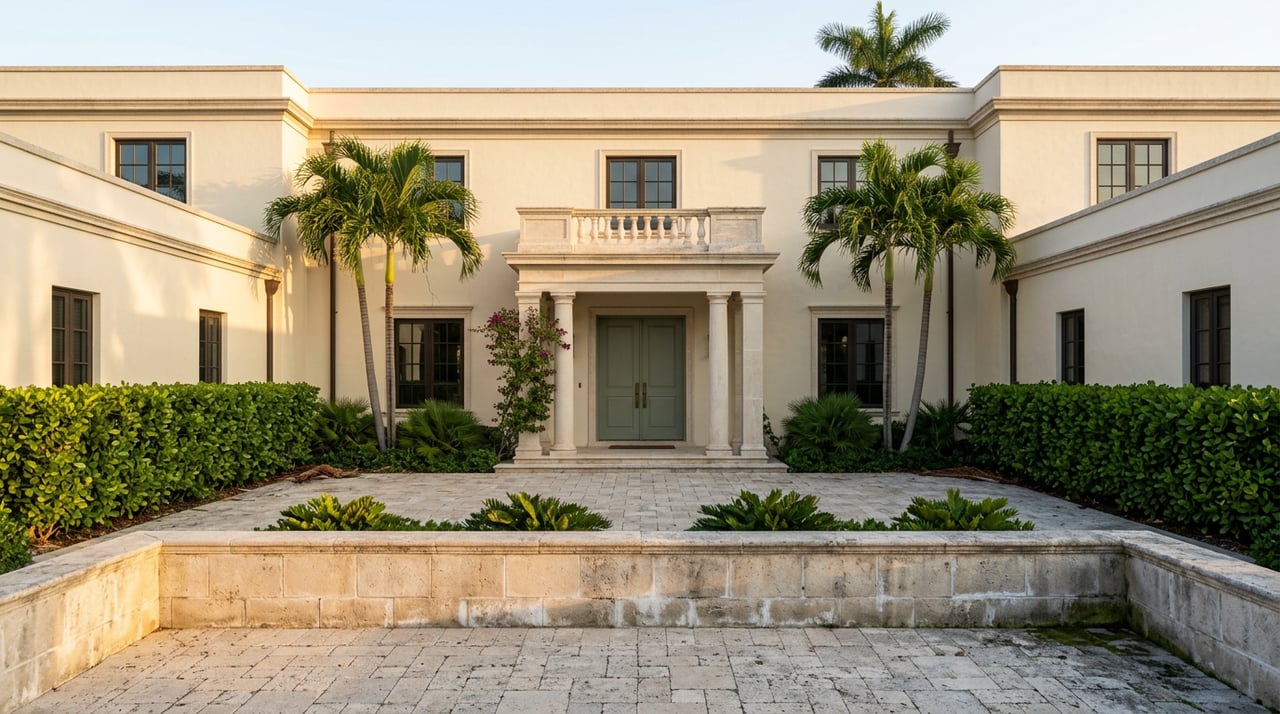
One of the clearest ways to reduce maintenance is to simplify the home’s envelope. FEMA’s guidance highlights the importance of careful detailing across the roof, overhangs, porch roofs, and the building envelope as a whole. The fewer vulnerable transitions, decorative projections, and complicated trim conditions you have, the fewer places moisture and wind can exploit.
This design approach also aligns with Ocean Ridge’s built context. Local ordinance language for the RHM district limits building height to 44 feet and no more than four stories, and flat roof areas must be screened by parapets, according to the town ordinance document. A restrained roofline and efficient circulation pattern often make both aesthetic and maintenance sense here.
Focus on a tight building envelope
A lower-maintenance coastal home usually benefits from:
- Simple roof geometry
- Well-detailed flashing and transitions
- Limited ornate trim and exposed decorative elements
- Durable exterior surfaces with fewer failure points
- Thoughtful inspection access for routine maintenance
When every component is exposed to salt, moisture, and wind, simplicity becomes a form of long-term protection.
Plan for impact protection and corrosion resistance
In a coastal setting, durability also includes openings and hardware. FEMA states that glazing protection may include permanent shutters or impact-resistant glass as part of a complete wind-resistant envelope in coastal construction. For many buyers, that is not only a storm-readiness decision but also a convenience decision.
Impact-resistant glazing can reduce the need to manage panels or temporary systems, while permanent shutters may be a practical option depending on the design. Likewise, corrosion-resistant connectors and fasteners are especially important where airborne salts are present. These are the quieter design decisions that often make ownership easier over time.
Control indoor humidity from the start
A coastal home does not stay low-maintenance if indoor moisture is ignored. The EPA advises keeping indoor humidity ideally between 30% and 50%, and FEMA notes that wet materials should be dried within 24 to 48 hours to reduce mold risk, as explained in its coastal construction resources. That means humidity control is not optional in a South Florida beach house.
You should think about moisture management as part of the home’s baseline performance. Durable finishes, prompt drying after any water event, and a building envelope detailed to reduce intrusion all support a cleaner, more stable interior environment. This is particularly important in second homes that may sit closed for stretches of time.
Design outdoor spaces that can handle the coast
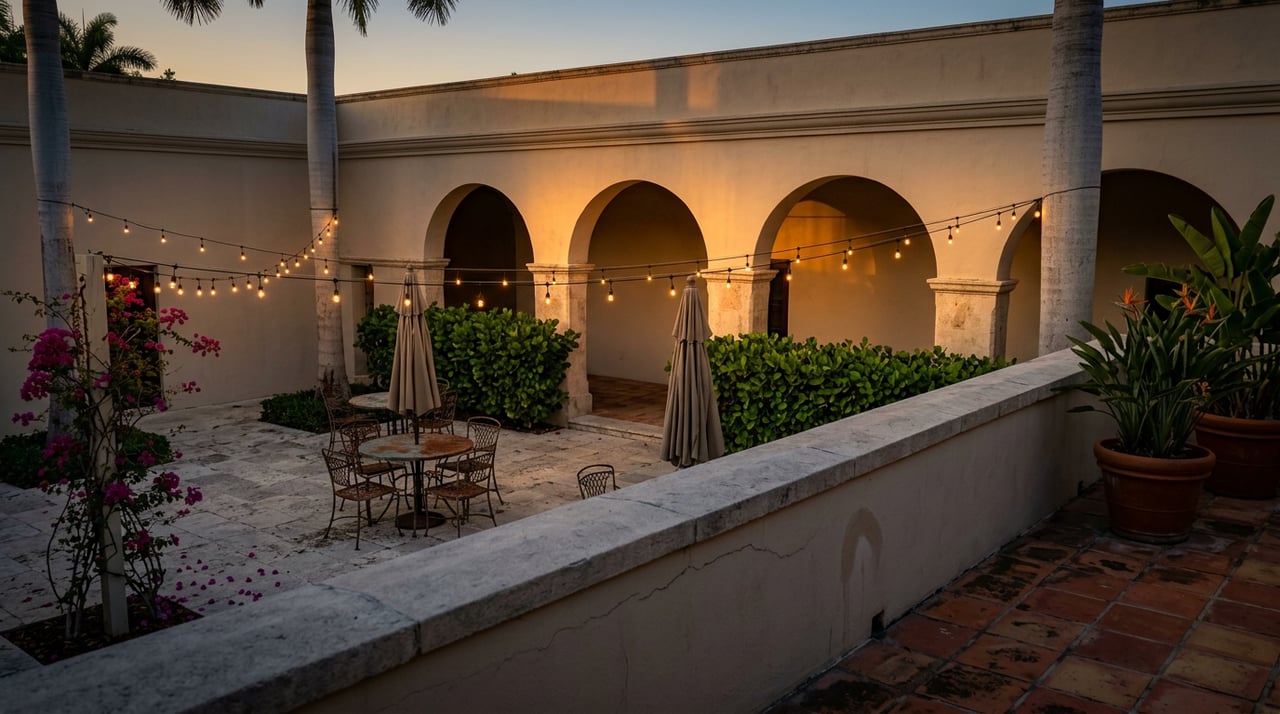
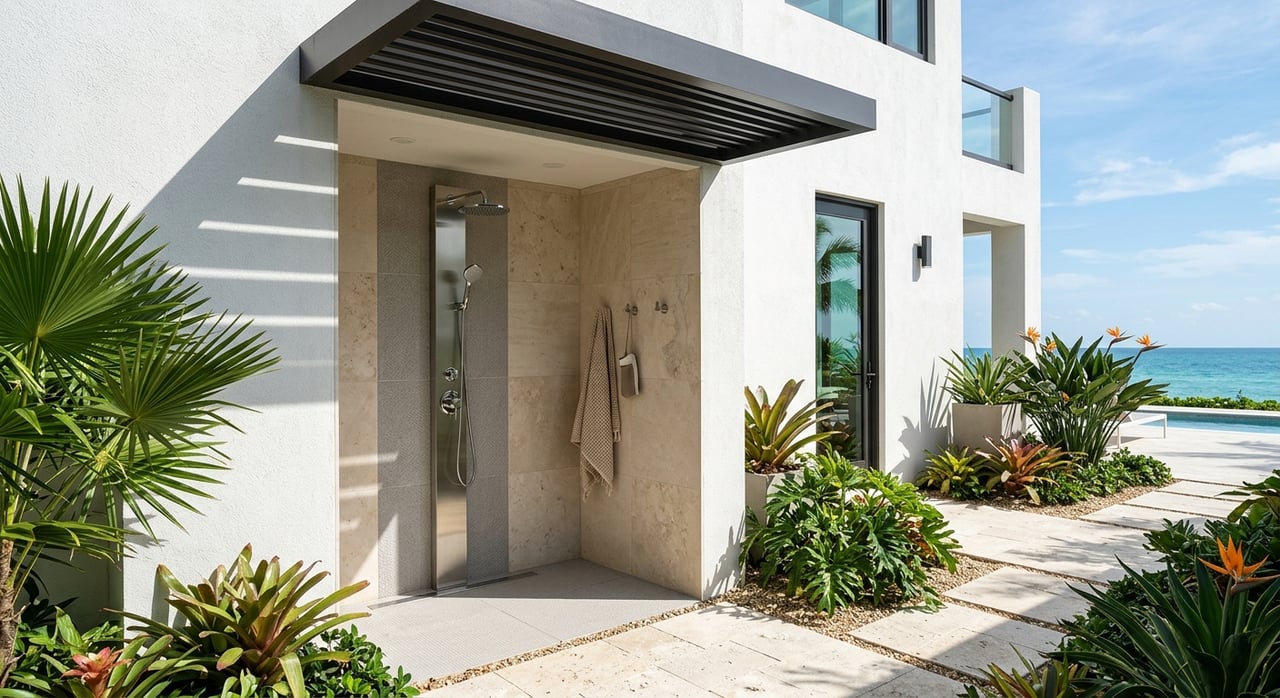
In Ocean Ridge, outdoor living is part of the appeal. The key is to build exterior spaces as durable extensions of the home rather than delicate features that require constant attention. In a climate shaped by salt, wind, moisture, and sun, resilient hardscape and straightforward circulation usually outperform fussy landscape elements.
That may mean prioritizing patios, covered terraces, and easy-to-rinse surfaces over high-maintenance specialty features. It can also mean selecting shade structures and transitions that are simple to inspect and maintain. Outdoor rooms should feel comfortable and refined, but they should also be built for the realities of the coast.
Rethink the lawn
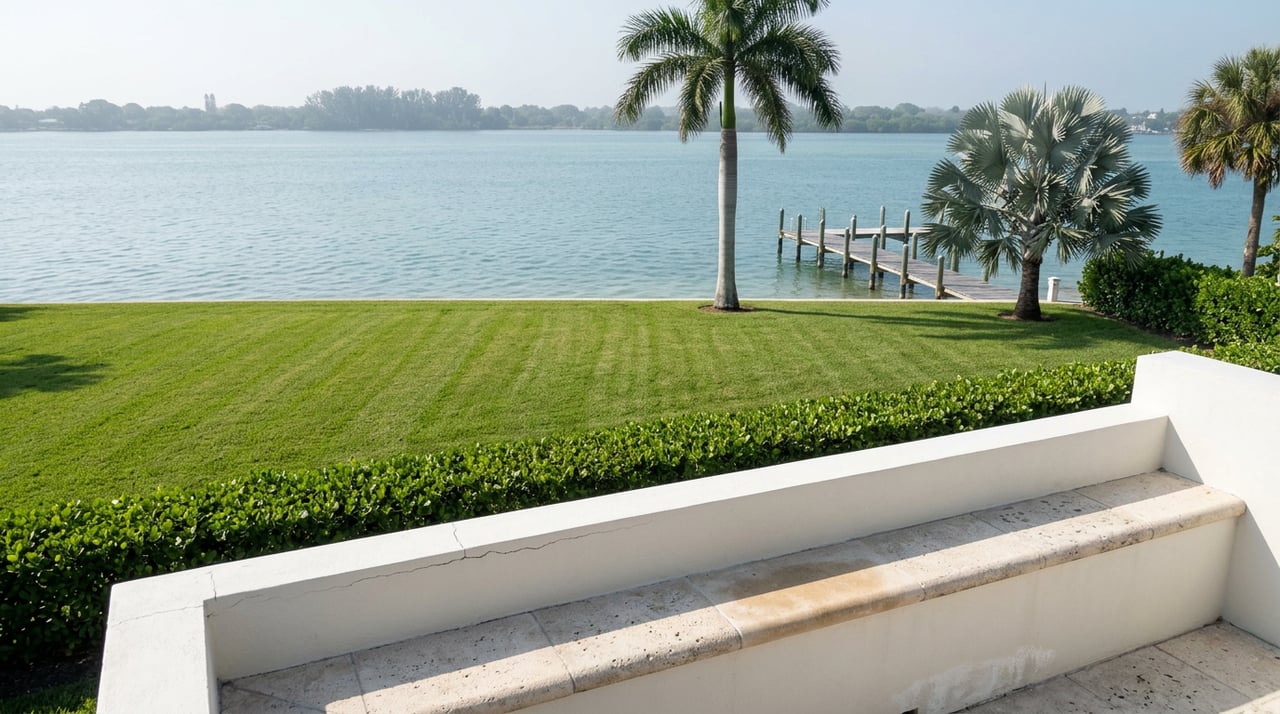
If your goal is low maintenance, less turf is often better. UF/IFAS notes that while seashore paspalum has excellent salt tolerance, it is high-maintenance and not recommended for home lawns, according to its guidance on salt-tolerant lawngrasses. That supports a more restrained landscape plan with reduced grass areas.
Instead, many owners may prefer a composition built around groundcovers, shrubs, and coastal plantings that can better suit the site. Fewer lawn zones can also mean less irrigation complexity and less weekly upkeep.
Use salt-tolerant plant selections
UF/IFAS advises that homes within about one-eighth of a mile of saltwater should use at least somewhat salt-tolerant plants. Its salt-tolerant plant guidance includes options such as:
- Beach sunflower
- Seaside goldenrod
- Railroad vine
- Gopher apple
- Sea oats
- Saw palmetto
- Spanish bayonet
Even so, coastal planting still requires fresh water to thrive, so irrigation and drainage remain important. Low-maintenance landscaping does not mean no planning. It means choosing plants and layouts that better match the conditions.
Keep current code in view
Any renovation or new construction plan should be aligned with the code edition in effect when permits are filed. The Florida Building Code, 8th Edition (2023) became effective on December 31, 2023. For buyers evaluating a property or considering updates, this matters because code compliance can affect scope, timing, and design decisions.
This is one reason many sophisticated buyers look closely at how a home was planned, built, or renovated, not just how it photographs. In a market like Ocean Ridge, durability, code alignment, and ease of ownership can all influence long-term value and day-to-day enjoyment.
What buyers should look for
If you are searching for a low-maintenance beach home in Ocean Ridge, focus on homes that combine design discipline with coastal practicality. The most compelling properties often share a few core characteristics.
Look for:
- Simple, well-resolved rooflines and exterior detailing
- Durable hard-surface materials in exposed or vulnerable areas
- Impact protection or other robust glazing strategies
- Corrosion-resistant hardware and connectors where relevant
- Thoughtful drainage, elevation, and site planning
- Outdoor spaces built around hardscape and salt-tolerant planting
- Manageable landscaping with limited turf
These features may not always be the flashiest details in a listing, but they often have the biggest impact on ease of ownership.
A well-designed Ocean Ridge beach home should feel polished, efficient, and resilient without sacrificing style. In a coastal market shaped by salt air, weather exposure, local planning constraints, and seasonal use patterns, low-maintenance design is not a shortcut. It is a smart, value-conscious strategy. If you are evaluating Ocean Ridge properties or planning your next move along the Palm Beach coast, Elizabeth DeWoody offers data-driven guidance and discreet market insight tailored to your goals.
FAQs
What makes an Ocean Ridge beach home low-maintenance?
- A low-maintenance Ocean Ridge home typically uses durable materials, a simple building envelope, thoughtful drainage, impact protection, and landscaping suited to salt-air conditions.
Which materials are best for a South Florida coastal home?
- FEMA identifies flood-damage-resistant materials such as concrete, concrete block, ceramic or clay tile, porcelain, stone, metal, cement board, and reinforced concrete for vulnerable areas.
Do Ocean Ridge homes need impact-resistant glass or shutters?
- FEMA treats glazing protection as part of a complete wind-resistant coastal envelope, often through impact-resistant glass or permanent shutters.
Which plants work best near the beach in Palm Beach County?
- UF/IFAS recommends starting with salt-tolerant options such as beach sunflower, seaside goldenrod, railroad vine, gopher apple, sea oats, saw palmetto, and Spanish bayonet.
Why should Ocean Ridge site planning address flood elevations early?
- Local permitting materials reference FEMA base flood elevations and the coastal construction control line, so early planning for elevation, drainage, and floodplain issues can shape the entire design approach.